Personal Trainer for Back Pain in London: How the Right Training Helps
By Lewis Paris ·
Lower back pain is the most common reason people get in touch with me. Most have already tried rest, massage, physio and painkillers. The pain eases for a while, then comes back.
If that's you, I want you to know two things. You're not broken. And for most people, the right kind of movement is part of the answer, not the thing to avoid.
First, when to see a doctor
I'm a coach, not a doctor or physio. If your pain started after a fall or accident, or comes with numbness around your bottom or genitals, problems peeing or pooing, chest pain or a high temperature, get urgent medical help by calling 111 or 999. If the pain isn't improving after a few weeks, see your GP.
I work alongside physios and osteopaths, and I'll refer you on if something needs a clinician. One osteopath I work with put it simply: "I don't recommend anyone more than him."
Why back pain keeps coming back
The NHS advice for most back pain is to stay as active as you can. Rest feels safe, but it usually makes things stiffer and weaker. In my experience, pain that keeps coming back usually comes from a few things working together:
- Weak glutes and trunk muscles. Your lower back ends up doing work your hips should be doing.
- A poor hip hinge. Bending from the spine instead of the hips, hundreds of times a day.
- Long hours sitting. Desk, car, sofa, repeat.
- Stress and poor sleep. Both make pain feel worse and slow recovery.
- Fear of movement. You protect your back, you move less, it gets weaker, and it hurts more.
That last one is the hardest to break on your own, and it's where good coaching makes the biggest difference.
How I work with back pain
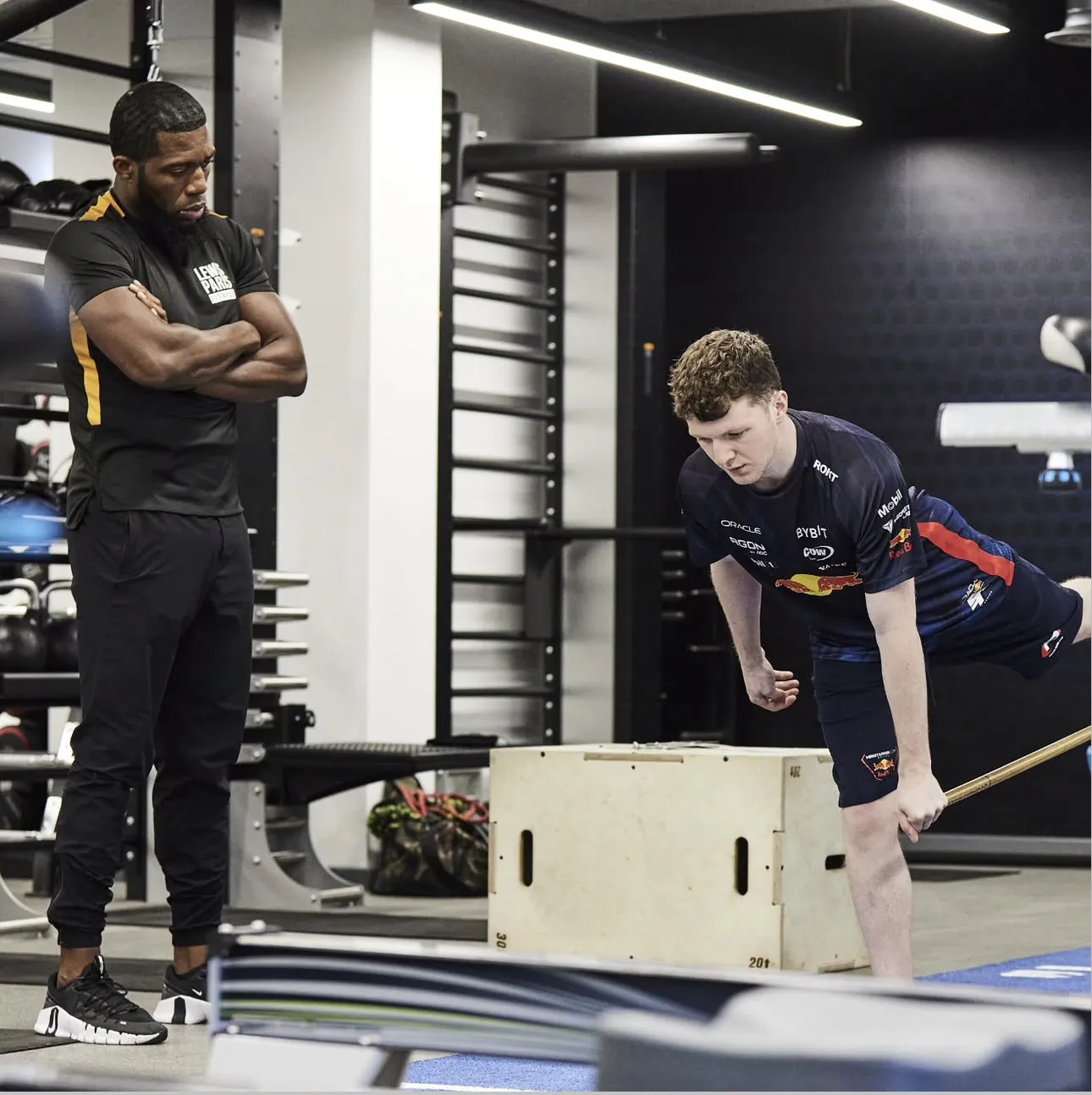
- Find the cause. Every client starts with a movement analysis of posture, mobility, squat, hinge, push and core. I want to see how your body moves before I load it.
- Calm it down. Gentle mobility, breathing and positions that ease the pain, so you have tools that work on a bad day.
- Build strength around it. Glutes, trunk and a proper hip hinge. We train around the injury, never through pain.
- Load it with confidence. We progress step by step until picking up the shopping, your kids or a suitcase doesn't make you think twice.
- Fix the rest of your day. Desk set-up, walking, sleep and stress. One hour with me can't undo 50 hours of sitting on its own.
What it looks like in real life
Jade is a managing director who had lived with lower back pain for nine years. She'd seen several professionals and still didn't understand the cause. Over nine months we found it, built a routine she could stick to, and she took ownership of her training.
The proof came out of nowhere. A thief snatched her bag in central London. Jade, who used to fear any movement that might hurt her back, chased him down in heels and held him until the police arrived. In her words, I was "the first person to get to the root cause of a prolonged back issue."
Another client, in his late 50s, came to me with disc problems. He'd needed injections to manage the pain, and spinal surgery was on the table. We built a careful plan to restore his movement, strength and balance. He avoided surgery, and trained with me pain-free for seven years.
Not every case ends like that, and I'll never promise it will. But it shows what's possible when you stop guessing and start building.
Three exercises to start with
These are gentle and suit most people with everyday lower back pain. Move slowly, breathe, and stop if anything makes your pain worse.
- Glute bridge. Lie on your back, knees bent, and squeeze your glutes to lift your hips. 2 sets of 10.
- Dead bug. Lie on your back, arms up, knees over hips. Slowly lower the opposite arm and leg while keeping your lower back still. 2 sets of 6 each side.
- Bird dog. On all fours, reach one arm forward and the opposite leg back. Hold for 2 seconds. 2 sets of 6 each side.
Add a daily walk. It's one of the simplest, most underrated things you can do for your back.
What to look for in a trainer for back pain
- They assess you before they train you.
- They're happy to work with your physio or GP.
- They never ask you to "push through" pain.
- They explain why you're doing each exercise.
- They have real results with people like you. Ask for them.
Comparing trainers? Here's what a personal trainer costs in London and what should be included.
If you're in central London, I train clients at Engine Room Gym on Albany Street, NW1, near Great Portland Street and Regent's Park. You can read more about how I work on my personal training page.
FAQs
Should I exercise with lower back pain?
For most everyday back pain, yes. NHS advice is to stay active. Start gently, avoid anything that sharply increases the pain, and see a doctor if you have any of the warning signs above.
Can a personal trainer fix back pain?
A trainer can't diagnose back pain, but the right one can help you build the strength, movement and confidence that stop it running your life. Many of my clients with long-term back pain now train pain-free.
Should I see a physio or a personal trainer for back pain?
See a physio or GP first for diagnosis and early treatment. A trainer who specialises in back pain is ideal for building strength once you know what you're dealing with, or alongside your physio.
How long does it take for training to help back pain?
Most clients feel a difference within a few weeks. Pain you've had for years takes longer to fully fix, often a few months of consistent training.